
1ST PLACE - NUTRI-MÁS

Isabella Aloyo Alex
International Relations
United States International University – Africa
Kenya
U
Ajak Daniel Garang
Business Information Technology
Mount Kenya University
Kenya
U
Angelina Wel Wech
Agriculture Sciences
EARTH University
Costa Rica
U
Awal Madol Anyang
International Business Administration
United States International University – Africa
Kenya
U
Achut Daniel Garang
International Studies
University of Nairobi
Kenya
U
What they're working on:
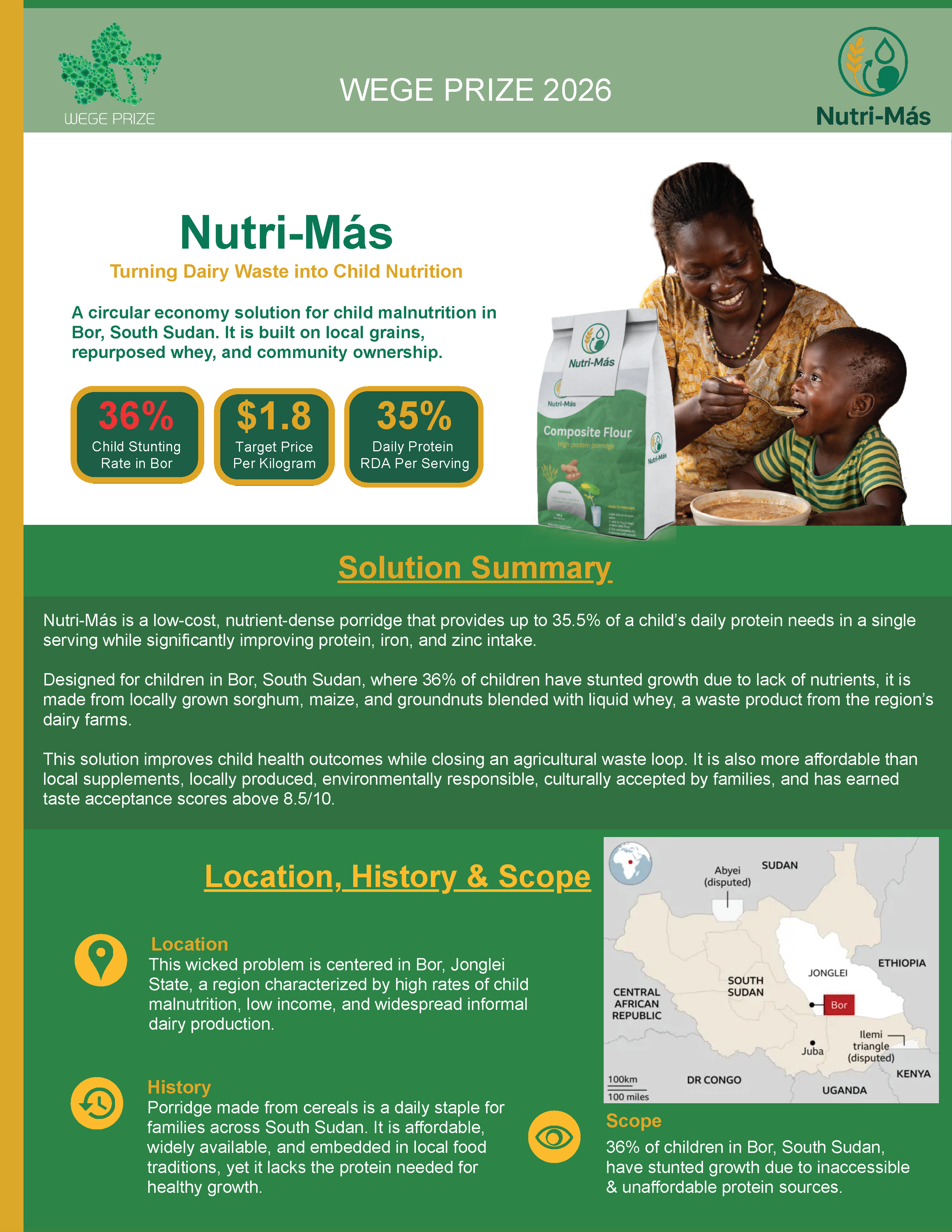
Nutri-Más blends locally grown sorghum, maize, and groundnuts with repurposed whey to create a nutrient-dense composite flour that improves protein and micronutrient intake for children facing malnutrition in Bor, South Sudan. Whey—which is typically discarded by dairy producers and contributes to water contamination—is transformed into a high-quality protein ingredient, closing a critical waste loop.
By strengthening the nutritional value of a familiar staple food while productively using agricultural and dairy by-products, Nutri-Más addresses the country's 36% child stunting rate and reduces environmental pollution from unmanaged dairy waste.
FINAL PROJECT OVERVIEW
click image above to view
FINAL PRESENTATION AND Q&A
2ND PLACE - AGRI NOVA

Allen Batoni
Conservation Agriculture
Rwanda Institute For Conservation Agriculture
Rwanda
U
Arnauld Nduwayo Cyuzuzo
Conservation Agriculture
Rwanda Institute For Conservation Agriculture
Rwanda
U
Grace Mushimiyimana
Electronics and Telecommunication Engineering
University of Rwanda
Rwanda
U
Acsah Nsabayesu Nitabara
Entrepreneurial Leadership
African Leadership University
Rwanda
U
Heritier Gitego Sewineza
Architecture
University of Rwanda
Rwanda
U
What they're working on:
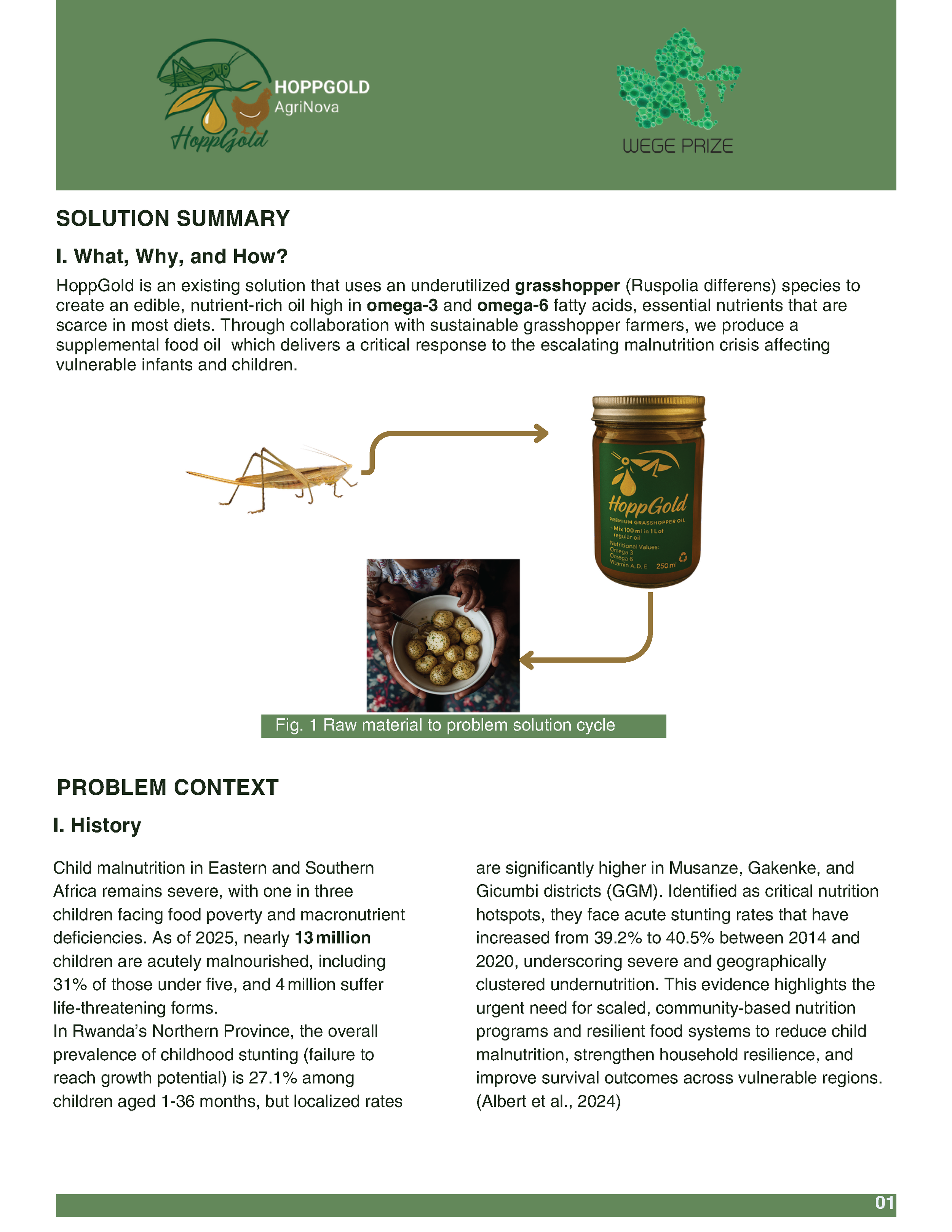
Agri Nova is developing HoppGold, a sustainable grasshopper rearing and oil production operation that delivers a critical response to the escalating malnutrition crisis affecting vulnerable infants.
By leveraging an underutilized, nearly endangered grasshopper species to create nutrient-rich oil high in omega-3 and omega-6 fatty acids, the team is working to provide widespread and affordable access to essential nutrients that are scarce in most diets.
FINAL PROJECT OVERVIEW
click image above to view
FINAL PRESENTATION AND Q&A
3RD PLACE - EGRET PADS

Daniel Nzasabamungu
Business Management
Kepler College
Rwanda
U
Bertin Singizwa Ndahayo
Information Technology
Carnegie Mellon University Africa
Rwanda
U
Gloria Igisubizo
Project Management
Kepler College
Rwanda
U
Danmark Sinayobye
Civil Engineering
Muhabura Integrated Polytechnic College
Rwanda
U
Devotha Ishimwe
Conservation Agriculture
Rwanda Institute for Conservation Agriculture
Rwanda
U
What they're working on:
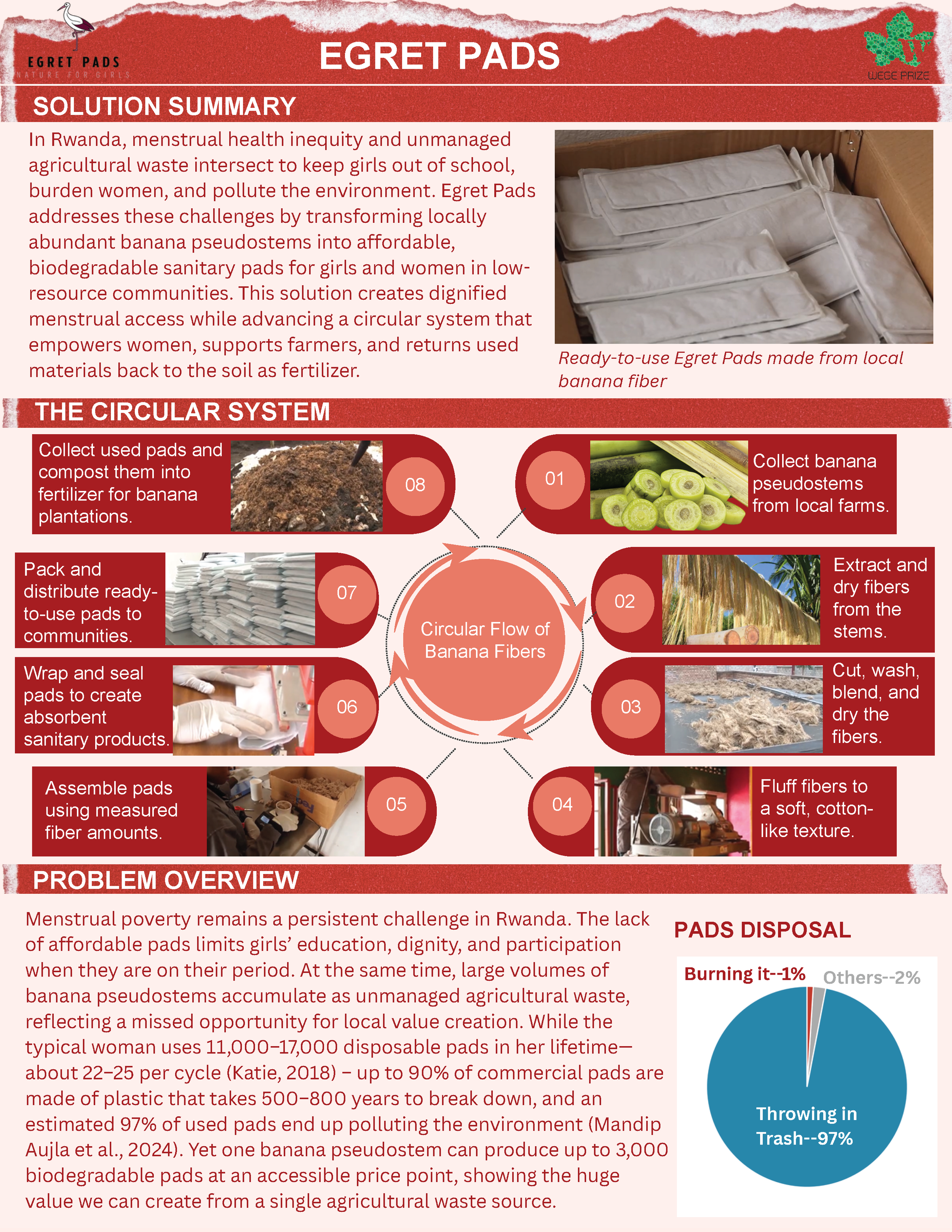
In Rwanda, menstrual health inequity and unmanaged agricultural waste intersect to keep girls out of school, burden women, and pollute the environment.
Egret Pads addresses this challenge by transforming locally abundant banana pseudostems into affordable, biodegradable sanitary pads for girls and women in low-resource communities, creating dignified menstrual access while advancing a circular system that empowers women, supports farmers, and returns used materials back to the soil as fertilizer.
FINAL PROJECT OVERVIEW
click image above to view