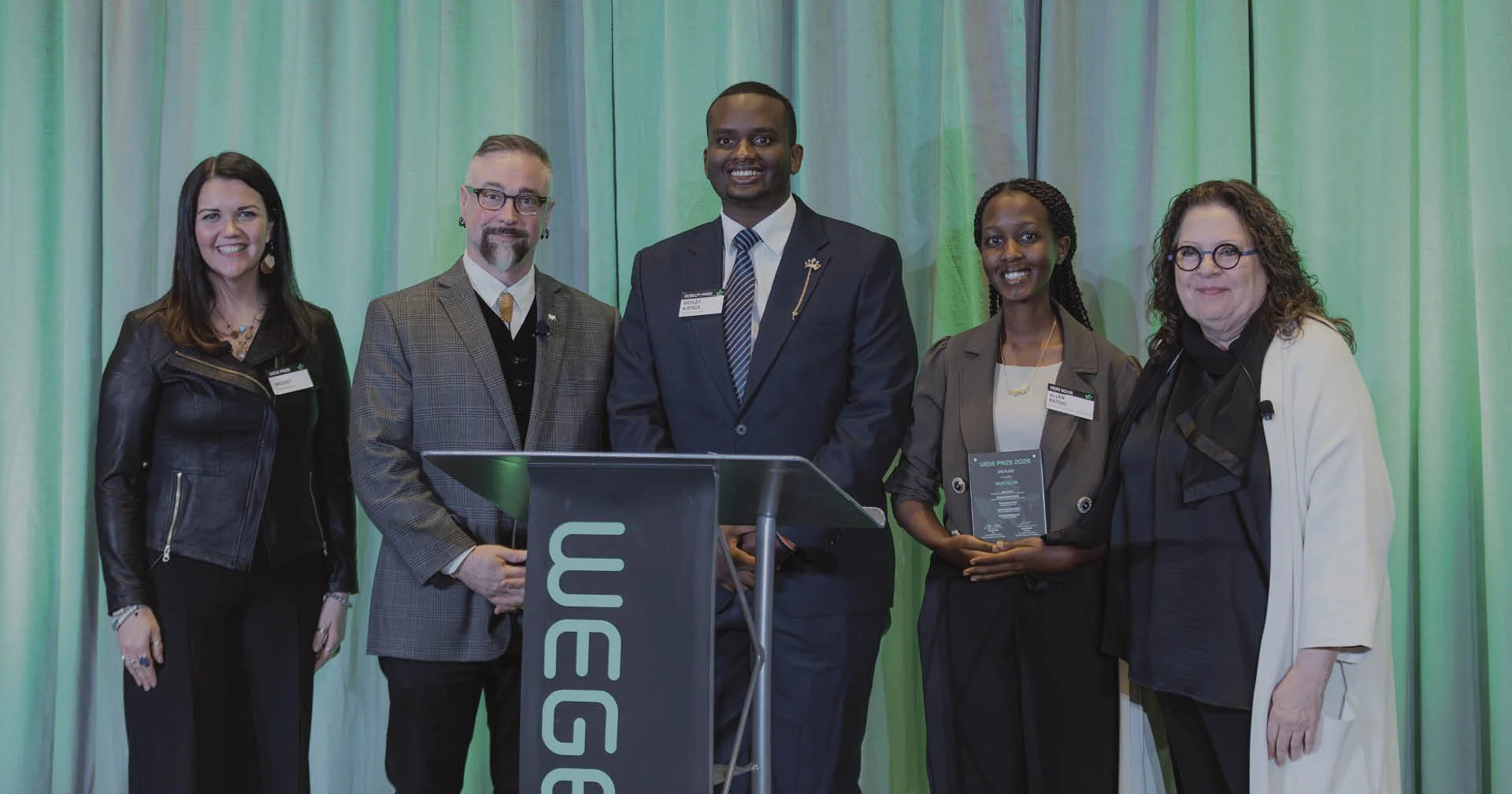
Shaped by their experience growing up together in Kenya’s Kakuma Refugee Camp, a team of students from South Sudan has won 1st Place and $35K in Wege Prize 2026 with a project to transform one of their home country’s most persistent sources of water contamination into a circular solution to address the issue of childhood malnutrition.
At the 2026 Wege Prize Awards on May 15, the five finalist teams in this year’s competition presented their bold ideas to solve complex, systems-level problems with products, services, and business models based on the three core principles of the circular economy: eliminating waste and pollution, keeping products and materials in circulation, and regenerating natural systems.
1st Place ($35K): Nutri-Más
What if a persistent water contaminant could supercharge South Sudan’s staple meal with critical nutrients for vulnerable children?
36%
of children under five in Bor, South Sudan are stunted, while another 27% are underweight
1:1
approximate cattle-to-person ratio in South Sudan—one of the highest in the world
90%
less land and water utilized for whey protein production vs. traditional beef production
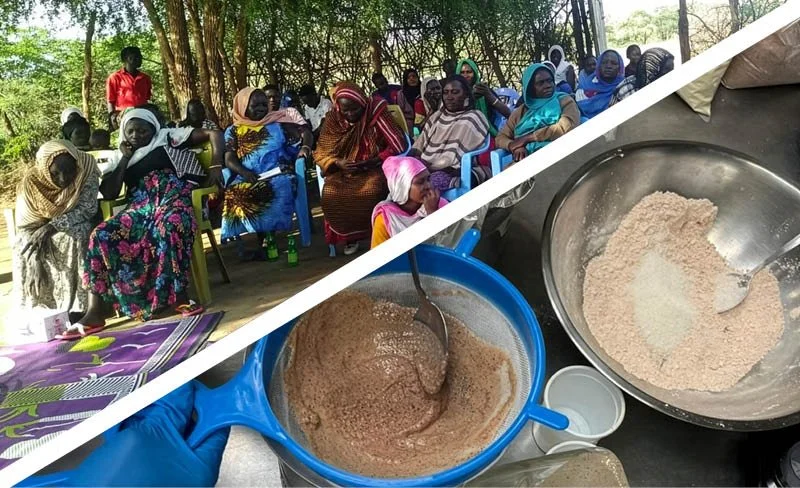
(above-left): Nutri-Más roots their work in direct connection with community stakeholders; (above-right): the team’s solution taps into the potential—and protein—of unmanaged dairy waste
The Problem
Porridge made from sorghum and maize is a daily staple for families across South Sudan—but it lacks the high-quality protein and micronutrients needed for healthy growth and development.
At the same time, protein-rich whey from informal dairy processing is routinely discarded untreated, and its high organic load contaminates soil and nearby waterways.
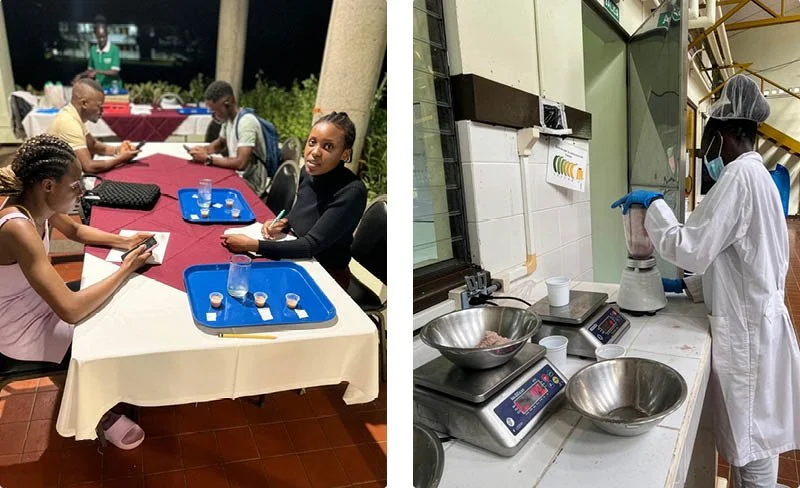
(left): Extensive taste testing helped Nutri-Más ensure their formula was healthy and appealing;
(right): Nutritional analysis was undertaken at the EARTH University food processing lab
The Solution
Nutri-Más is leveraging this widespread waste stream to enrich the porridge families already know and love, blending whey into the traditional flour to create a nutrient-dense alternative.
Whey proteins are highly digestible with strong biological value, making them particularly effective for developing children—and they’re far less resource-intensive to produce than beef.
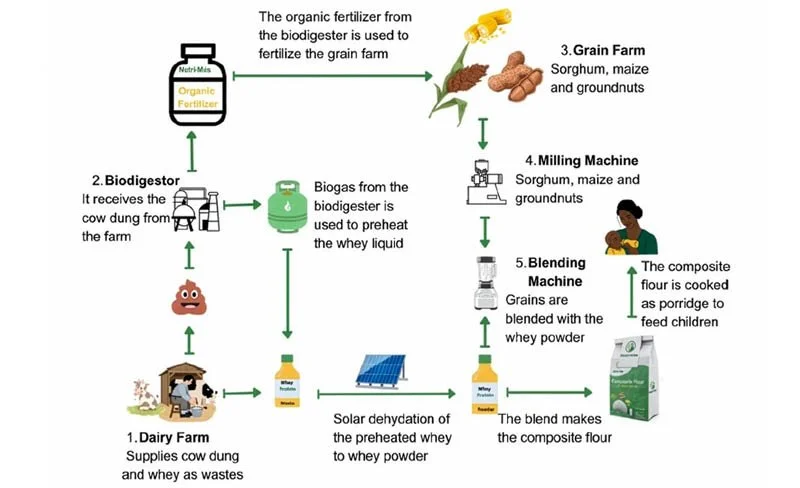
Illustration of how materials flow in Nutri-Más’ circular system
The Team

Isabella Aloyo Alex
International Relations
United States International University – Africa
Kenya
U
Ajak Daniel Garang
Business Information Technology
Mount Kenya University
Kenya
U
Angelina Wel Wech
Agriculture Sciences
EARTH University
Costa Rica
U
Awal Madol Anyang
International Business Administration
United States International University – Africa
Kenya
U
Achut Daniel Garang
International Studies
University of Nairobi
Kenya
U
2nd Place ($20K): Agri Nova
What if one of the world’s most popular edible insects could deliver a crucial response to the escalating malnutrition crisis?
13 million
children in Eastern/Southern Africa are facing malnutrition
31%
of children affected are
under the age of 5
4 million
malnourished children suffer life-threatening effects
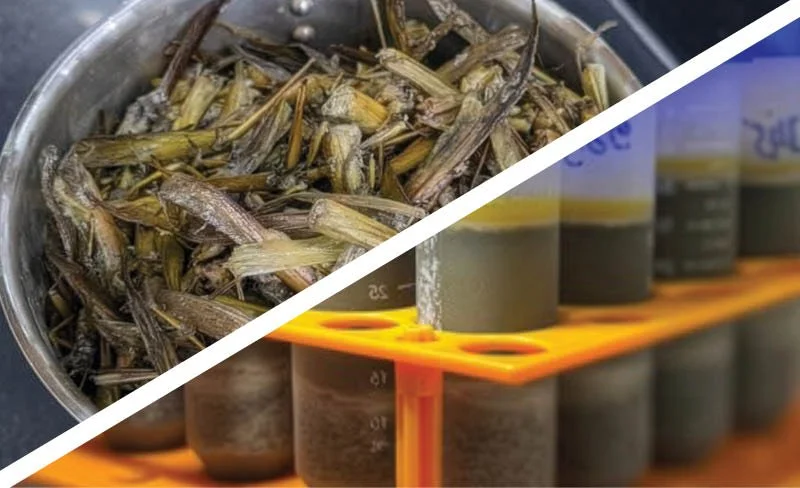
Agri Nova’s edible grasshopper oil is helping make critical nutrition accessible
The Problem
Across Eastern and Southern Africa, acute malnutrition is already severe—and without urgent action, climate shocks, conflict, and economic instability will drive it higher still.
Extracting omega acid-rich oil from Ruspolia differens, Africa’s most widely-eaten grasshopper, could provide a more affordable way to access the insect’s powerful nutritional benefits.
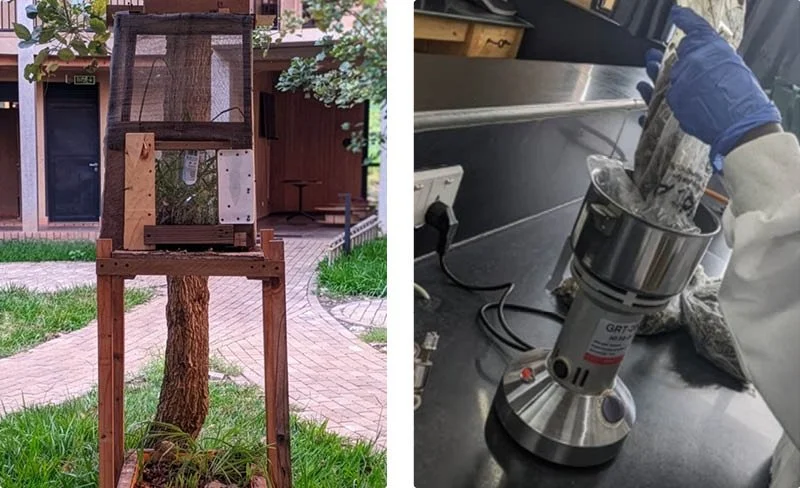
(left): Agri Nova’s small-scale domestic grasshopper rearing cage; (right): Grinding the grasshoppers during the oil extraction process
The Solution
Agri Nova is building a sustainable grasshopper rearing operation to produce a low-cost, nutrient-dense edible oil rich in the omega fatty acids essential for growth and development.
Their regenerative process also yields calcium-rich pellets used as feed for laying hens—boosting farmers’ productivity and profits while generating organic manure that restores soil fertility.
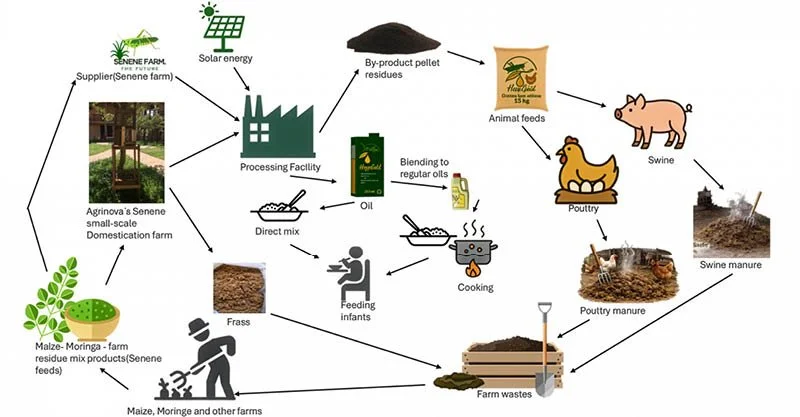
Illustration of how materials flow in Nutri-Más’ circular system
The Team

Allen Batoni
Conservation Agriculture
Rwanda Institute For Conservation Agriculture
Rwanda
U
Arnauld Nduwayo Cyuzuzo
Conservation Agriculture
Rwanda Institute For Conservation Agriculture
Rwanda
U
Grace Mushimiyimana
Electronics and Telecommunication Engineering
University of Rwanda
Rwanda
U
Acsah Nsabayesu Nitabara
Entrepreneurial Leadership
African Leadership University
Rwanda
U
Heritier Gitego Sewineza
Architecture
University of Rwanda
Rwanda
U
3rd Place ($10K) - Egret Pads
What if the key to helping girls and women in low-resource areas overcome menstrual poverty has been lying left to rot?
20%
of Rwandan schoolgirls miss 50+ days/year due to lack of accessible menstrual products
3,000
biodegradable menstrual pads can be created from a single banana pseudostem
9 million
tonnes of banana stem waste are generated each year in Rwands
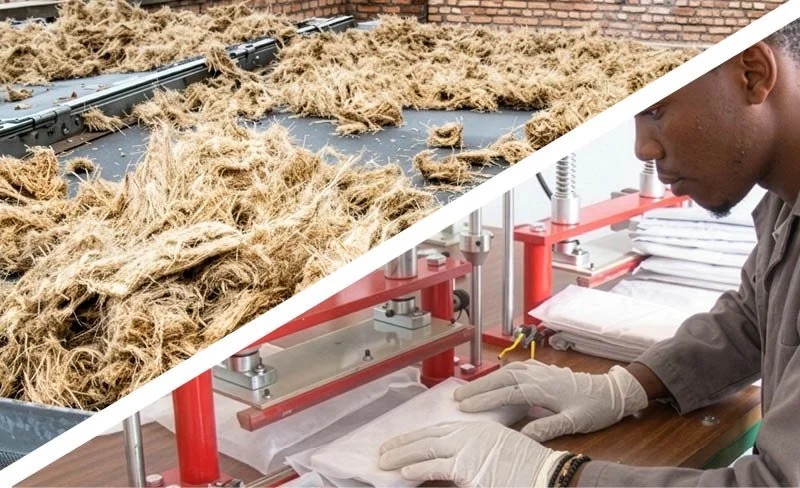
(above-left): Banana pseudostems—a major pollutant in Rwanda—can become a valuable and versatile material; (above-right): Egret Pads is turning this banana crop waste into biodegradable menstrual pads
The Problem
In Rwanda, menstrual health inequity and unmanaged agricultural waste converge—denying women dignity and opportunity, keeping girls out of school, and degrading soil and water.
Existing pads are expensive and full of harmful plastics; an estimated 97% end up as pollution. Meanwhile, rotting banana stems attract pests, release toxic emissions, and contaminate water sources.
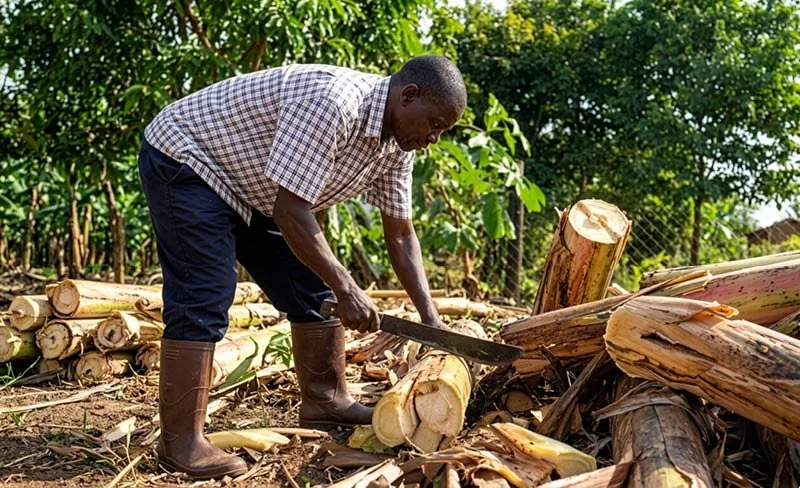
(above): Banana farmers typically discard pseudostems after harvest, creating numerous environmental
aftershocks while ignoring the potential of this waste as a textile feedstock—and revenue stream.
The Solution
Egret Pads addresses both challenges by turning a locally abundant waste stream into affordable, biodegradable sanitary pads for women and girls in low-resource communities.
Their solution creates dignified menstrual access while advancing a circular system that empowers women, supports farmers, and returns used pads to the soil as fertilizer.
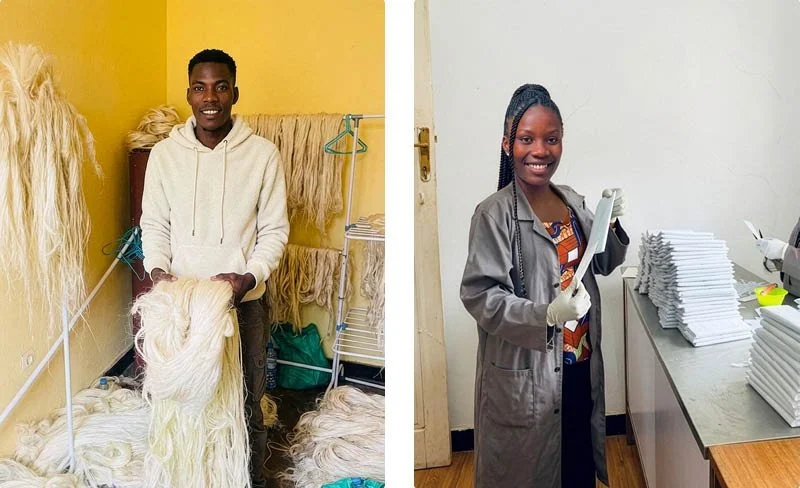
(left): Processed banana fibers ready for manufacturing; (right): A stack of finished pads being prepared for delivery to local communities
The Team

Daniel Nzasabamungu
Business Management
Kepler College
Rwanda
U
Bertin Singizwa Ndahayo
Information Technology
Carnegie Mellon University Africa
Rwanda
U
Gloria Igisubizo
Project Management
Kepler College
Rwanda
U
Danmark Sinayobye
Civil Engineering
Muhabura Integrated Polytechnic College
Rwanda
U
Devotha Ishimwe
Conservation Agriculture
Rwanda Institute for Conservation Agriculture
Rwanda
U
The work doesn't stop here.
Wege Prize 2027 is open to undergraduate, graduate, and postgraduate students from anywhere in the world — start building your team today. Join our mailing list to stay up-to-date on all the latest developments, and connect with alumni and future collaborators through the Wege Prize LinkedIn community.