
International design competition organized by Ferris State University’s Kendall College of Art and Design accepts 90 teams after a record-setting application period and names five new judges.
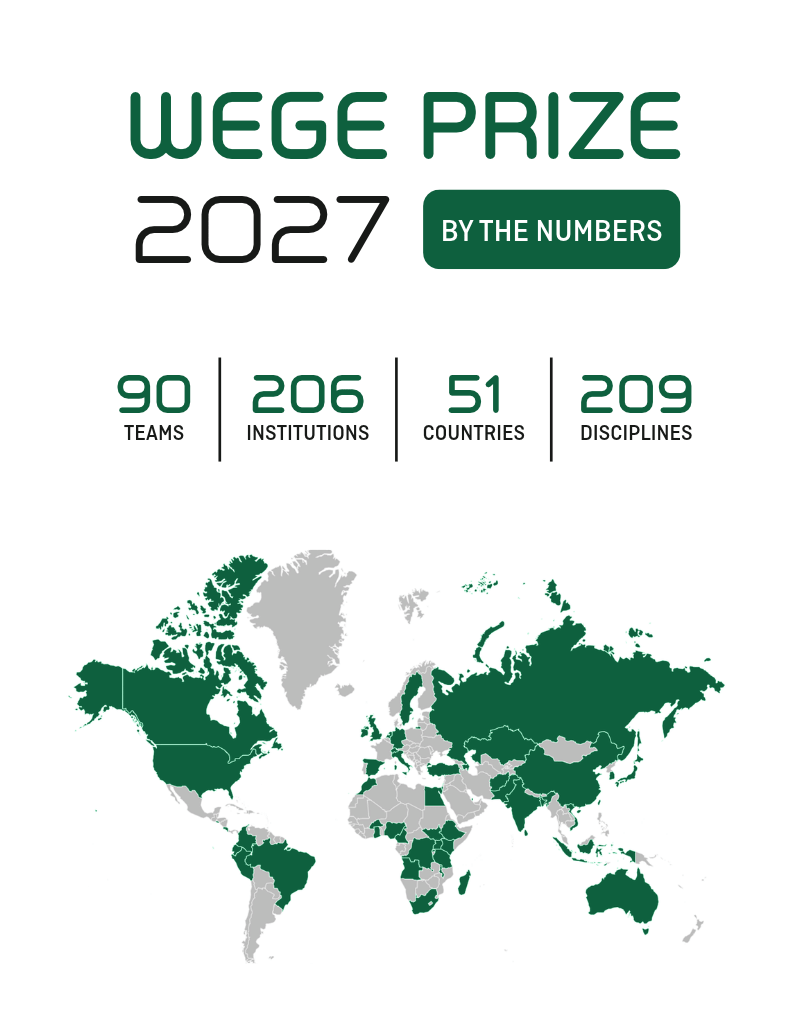
A record 450 university students from 51 countries have begun reimagining the way we produce and consume by designing innovative circular economy solutions to problems ranging from water scarcity to construction waste as Ferris State University’s Wege Prize opens its 14th competition cycle.
The 90-team field in Wege Prize 2027 steps up to the challenge as the global conversation on circularity is shifting rapidly from incubation to integration. The linear “take-make-waste” economy loses an estimated €25.4 trillion in wealth and resources a year, roughly a third of global GDP, according to the Circularity Gap Report 2026 from Circle Economy and Deloitte.
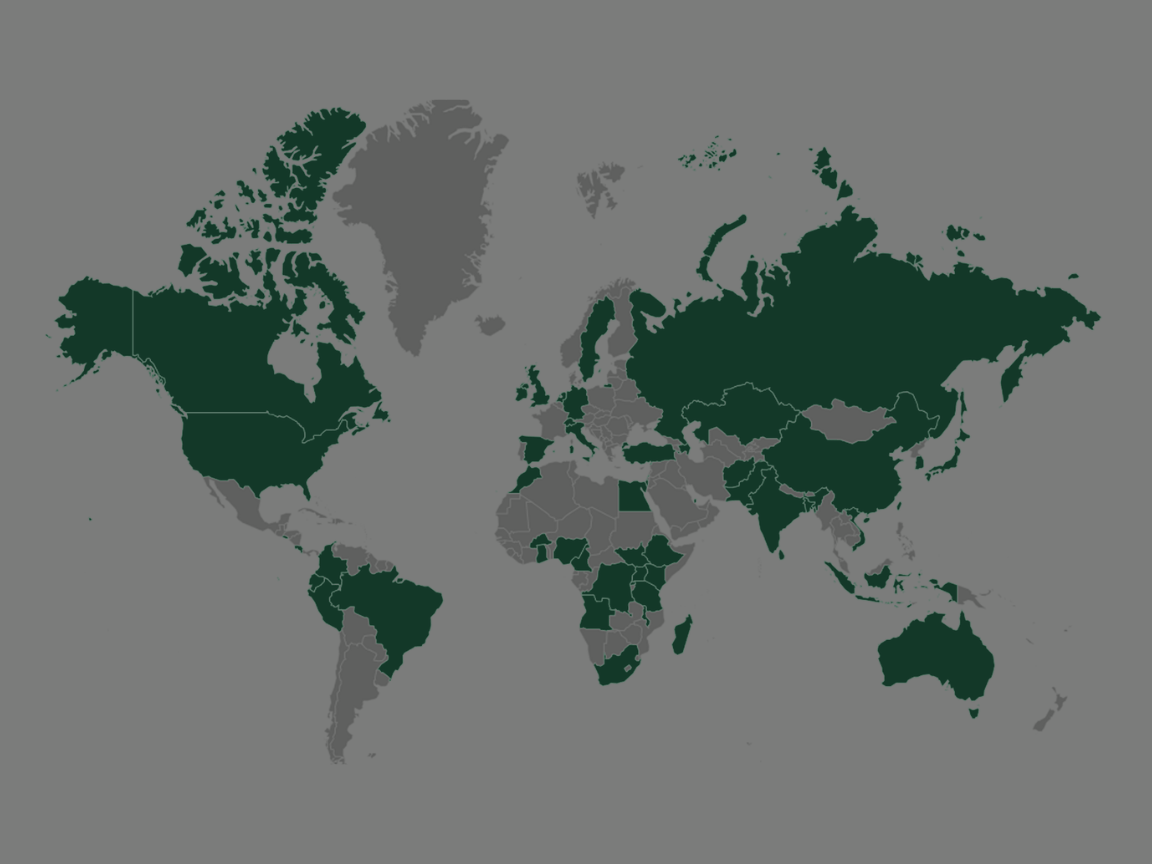
The 2027 cohort represents 209 institutions of higher education and 206 academic disciplines, each a competition record — up from 33 countries, 126 institutions and 194 disciplines last cycle. The field includes 137 institutions represented for the first time and nine first-time countries: Angola, Azerbaijan, Burkina Faso, Ecuador, El Salvador, Kazakhstan, Madagascar, Peru and South Sudan.
“Turning circular principles into action requires a multitude of stakeholders at the table, and we’re excited to see new ways of thinking and working take stronger root across campuses and industries alike in every kind of discipline, not just design,” said Wege Prize organizer Gayle DeBruyn, a professor of design at Ferris State University. “No single discipline can solve wicked problems alone, and Wege Prize brings students together across fields and borders to learn what it really takes to move circular solutions from idea to implementation.”
Organized by the Wege Center for Sustainable Design at Ferris State University’s Kendall College of Art and Design, Wege Prize challenges teams of five students — representing at least three academic disciplines and two institutions of higher education — to develop products and services that solve real-world problems while benefiting people, businesses and the environment.
Teams work through an immersive, iterative design process. They first define an entry point into their chosen problem, then develop a solution grounded in the three core principles of the circular economy set out by the Ellen MacArthur Foundation: eliminate waste and pollution, keep products and materials in circulation, and regenerate natural systems.
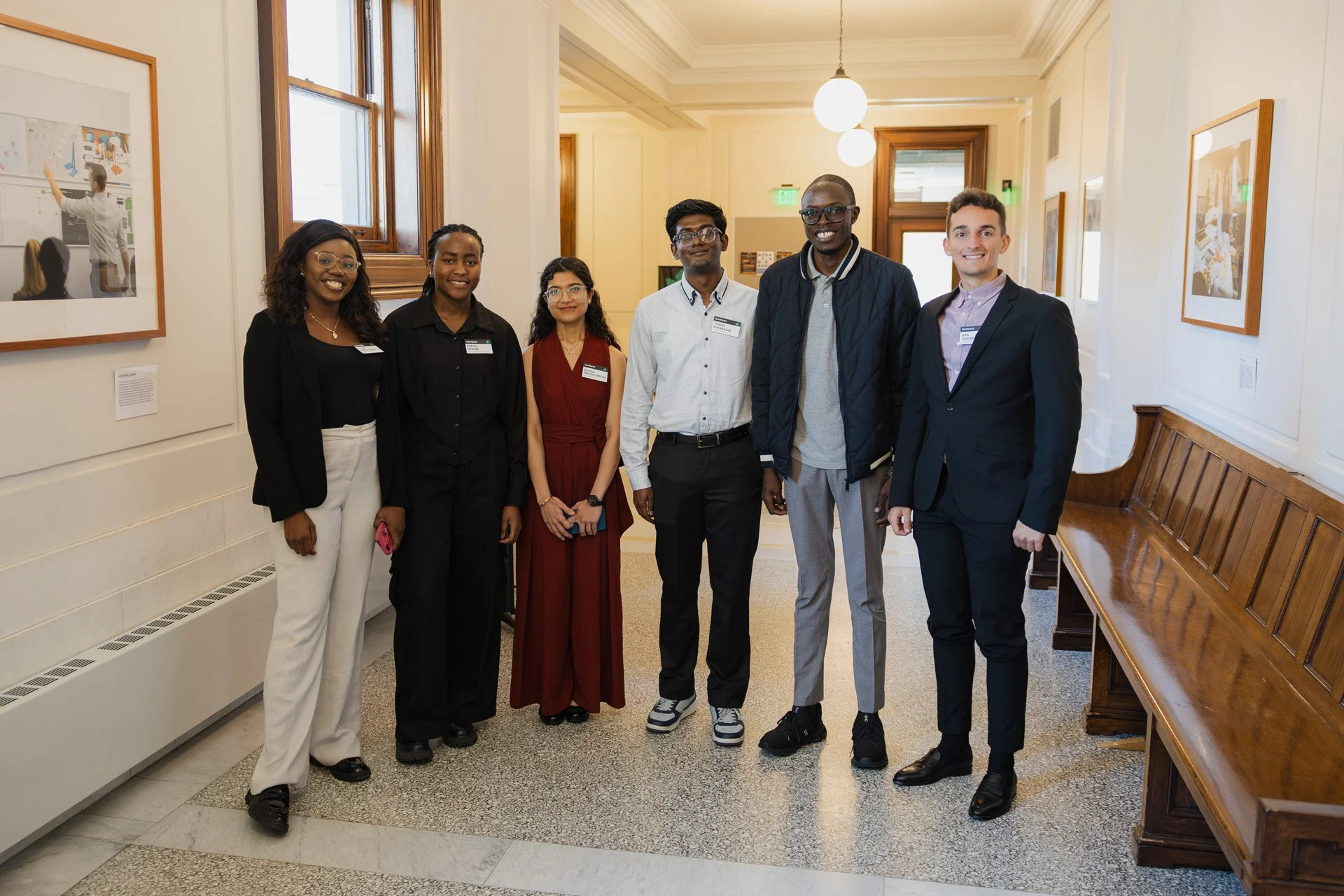
Finalist team members in Wege Prize 2025 gather in Grand Rapids, Michigan, USA for the annual Wege Prize Awards
The projects in this year’s field track closely with the priorities that emerged from global circular economy gatherings in 2026.
At the 10th World Circular Economy Forum in Gandhinagar, India, in September, the forum’s roughly 2,600 participants concluded that investment in circular solutions hinges on predictable policy, functioning markets, reliable data and integrated value chains. Several Wege Prize teams are tackling that data gap directly, like students from Kazakh National Academy of Architecture and Construction and L. N. Gumilyov Eurasian National University in Kazakhstan, who are building a GIS platform that maps building demolition sites as material repositories and gives each material a digital passport matched to its best reuse.
Days later at Climate Week NYC, the conversation centered on highlighting innovations that help reframe circularity as far more than recycling. Many Wege Prize 2027 teams are leveraging circular design for resilience and resource security, including one group from Avans University of Applied Sciences, Erasmus University Rotterdam, and Wageningen University in the Netherlands developing a microalgae-driven pre-treatment process to make desalinization 50% more energy efficient.
Other Wege Prize 2027 teams are rethinking ownership altogether, like a group of students from institutions in China, Italy, Turkey, and Morrocco who are developing reusable, bio-based protective food packaging offered through a subscription model and returned through a producer-controlled loop.
As the competition progresses, teams refine their approach based on in-depth feedback from a multidisciplinary panel of expert judges, with five finalist teams ultimately invited to compete for cash prizes totaling $65,000 USD.
“More than a competition, we see Wege Prize as a global learning lab where judges are connecting and coaching instead of simply scoring submissions,” said DeBruyn. “And while we always hope to see ideas continue to grow and evolve toward real-world implementation, the real value lies in the mindset shift our participants experience, and what happens when they bring that mindset into their career as part of the next generation of leaders and change agents.”
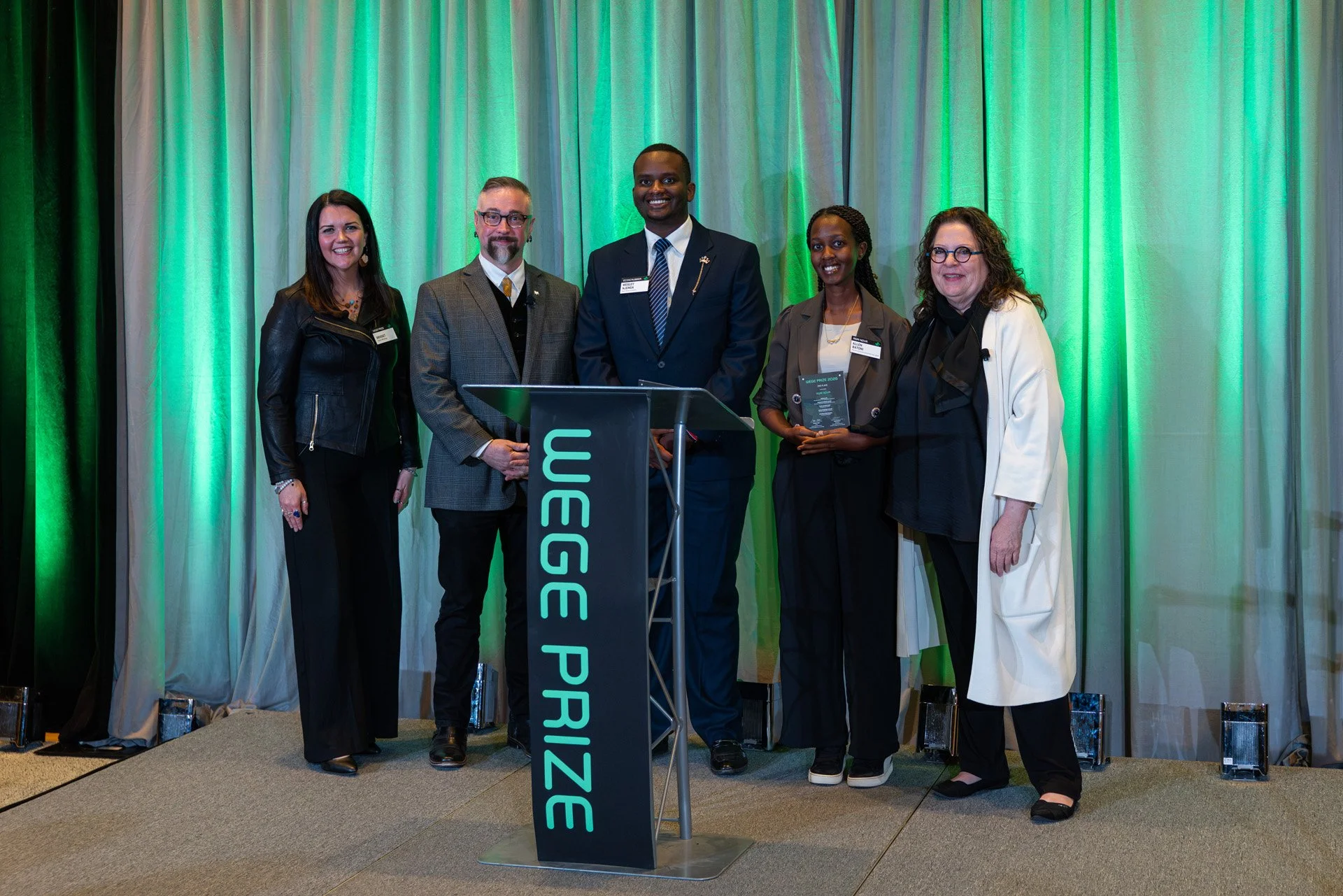
Awards presentation at the 2026 Wege Prize Awards this past spring.
Five new members join Wege Prize’s preliminary judging panel for the 2027 cycle, adding expertise in materials, supply chain management, design and systems thinking. They include Kari Bliss, who leads sustainability strategy and market innovation at PADNOS, one of the world’s most diversified industrial recyclers, which processes 4 billion pounds of metals, plastics, paper and electronics annually.
“I believe materials and people share something in common: both are made to be remade. After nearly three decades in sustainability, sixteen of them in the recycling industry, I’ve seen what’s possible when we design with the whole life of a product in mind, and the Wege Prize puts that mindset in the hands of students early,” said Bliss. “I joined the panel to champion that kind of thinking, and I hope to walk away inspired by the next generation of problem solvers while offering real-world insight to help their ideas take root.”
The other new judges for Wege Prize 2027 are:
Eugene Hooks, a design consultant and 2025 Churchill Fellow who recently completed a global tour meeting designers, manufacturers, researchers, governments, educators and innovators to study what moves circular systems from ambition into practice.
Sam Simmons, global sourcing manager at General Motors, who leads research and sourcing for lower-carbon steel, aluminum and resins. His 15-year career spans sustainable materials procurement, automotive program management and international development.
Ann Verhey-Henke, a collaboration design consultant and facilitation expert with more than 25 years of experience helping organizations build capacity for collective impact. As co-founder of Campfire Gatherings, she guides multi-stakeholder groups across sustainability, public health and energy in co-creating actionable strategies.
Gabe Wing, vice president of sustainability at MillerKnoll, who works to turn sustainability from aspiration into action. Since joining Herman Miller (now MillerKnoll) in 2001, he has worked across products, materials, operations and partnerships to make sustainable design a driver of innovation.
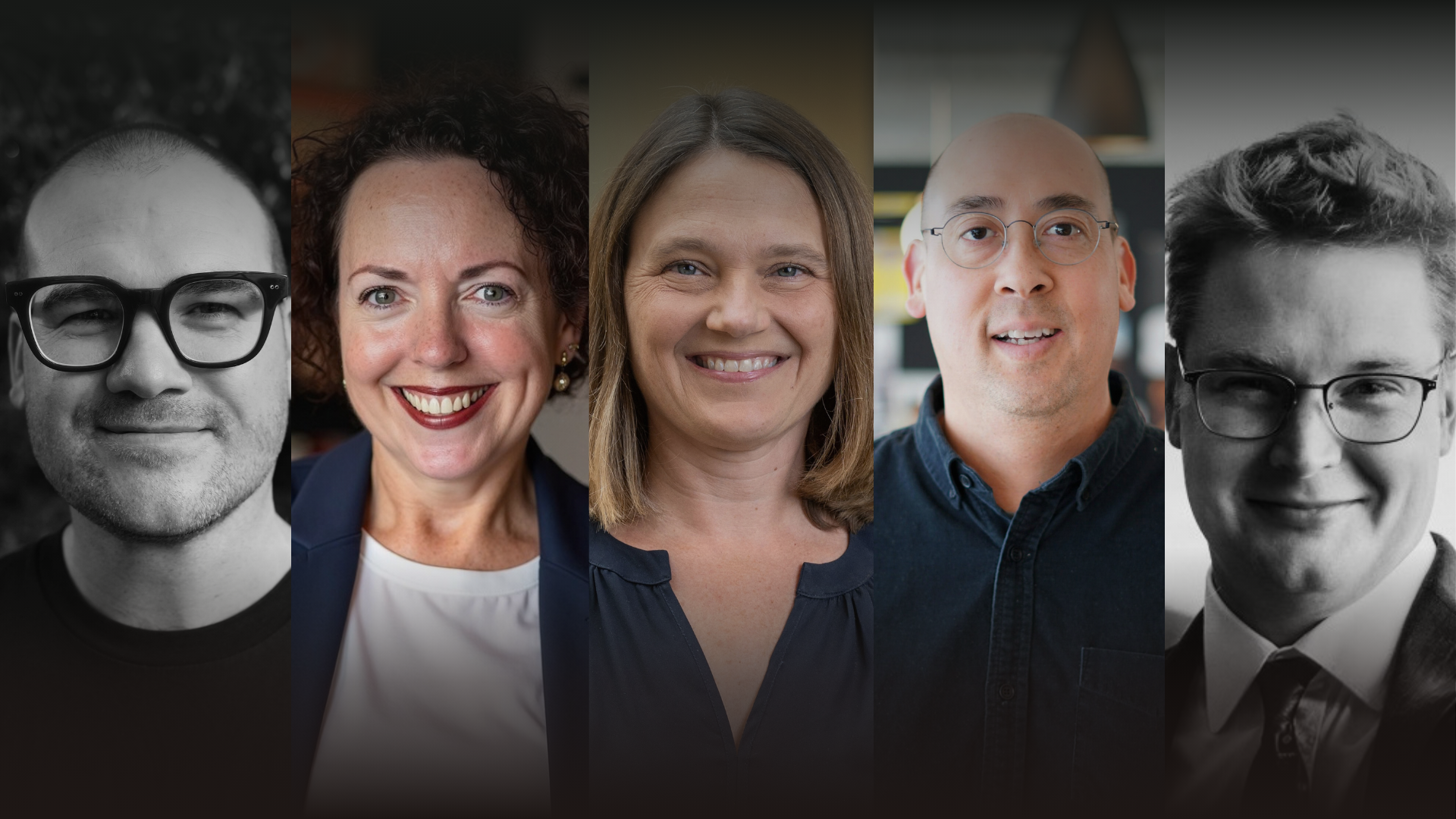
New Wege Prize preliminary judges for 2027 (left to right): Eugene Hooks, Kari Bliss, Ann Verhey-Henke, Gabe Wing, and Sam Simmons
The preliminary judges will give feedback to all 90 teams before advancing 30 to Phase 2 of the competition.
Past Wege Prize finalists show where the competition can lead. Several have launched circular enterprises and earned recent international recognition.
Rutopia, the 2018 winner, took home top honors in the In Development and Impact Entrepreneur categories at EY Entrepreneur Of The Year™ 2026 México this fall. Co-founded by Emiliano Iturriaga and Sebastián Muñoz, the company runs an online platform that empowers indigenous communities to be players in the ecotourism industry without sacrificing environmental stewardship.
“The most important thing was to turn the dream into a real business, but also without losing our purpose and the vision that we have from the beginning,” said Muñoz, who earned a bachelor’s degree in industrial design from Mexico’s Technological Institute of Monterrey in 2019. “We’ve been profitable for a while now, we’re helping communities, and we have a really unique and differentiated product.
Banofi, the 2023 winner, saw its plant-based leather made from banana crop waste used in designer Genaro Rivas’s Autumn/Winter 2026 collection at London Fashion Week in February. The company is working to solve a problem where many leather alternatives have fallen short: creating a material with the pliability and tensile strength needed for garment construction.
“We started in a small little shed where we were doing everything manually, and after winning Wege Prize we had some funding to say ‘OK, now how do we really do this?’” said Banofi founder Jinali Mody, who earned a master’s degree in environmental management from Yale University in 2023.
AgPress, the 2025 winner, was shortlisted for the Idea Award at the 2026 Moonshot Awards after launching the final prototype of a closed-loop mealworm and maize farming system to fight malnutrition in their home country of Tanzania.
“We know what people face and we know how they’re affected, because we’ve been with them in the same environment,” said team member Daniel Mndeme, who recently earned a bachelor’s degree in agricultural sciences from EARTH University in Costa Rica. “Every day we are working to come up with a solution that can help.”
The five finalist teams in Wege Prize 2027 will present their fully developed solutions at the 2027 Wege Prize Awards on May 21, 2027 at Ferris State University’s Kendall College of Art and Design in Grand Rapids, Michigan.
Less than three weeks later, the global circular economy conversation moves to the United States, with the 2027 World Circular Economy Forum to be held in New York from June 8–11.